
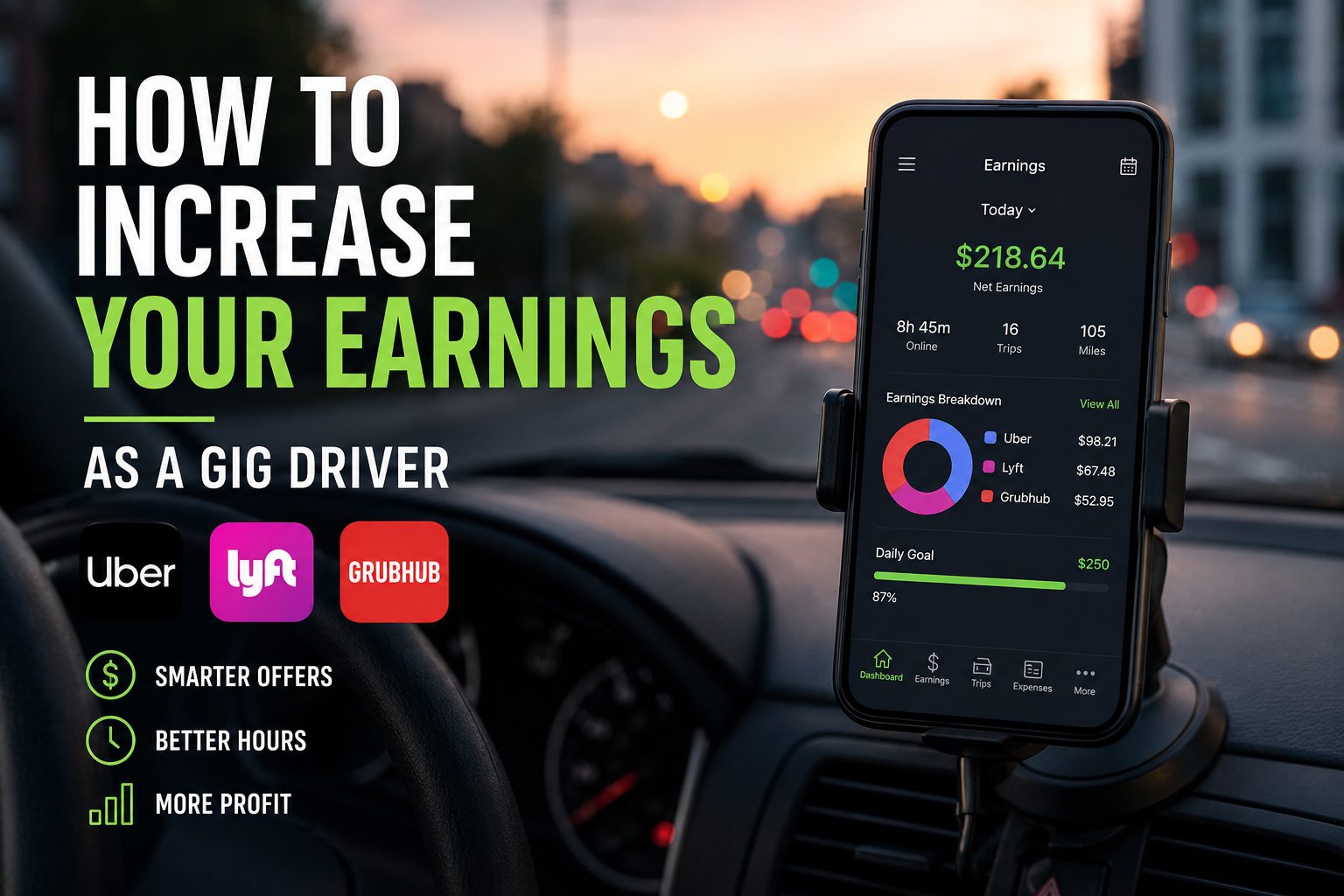
How to Increase Your Earnings as a Gig Driver
Two drivers can work the same city, drive the same hours, and still finish the night with very different earnings.
One driver accepts almost every offer, chases every busy area, and hopes the next request is better. The other driver knows their minimums, avoids bad pickups, tracks expenses, and understands when each app is most likely to pay well.
The difference is not always effort. A lot of the time, it is strategy.
Whether you drive for Uber, Lyft, Grubhub, or a mix of gig apps, your earnings depend on more than just staying online. The offers you accept, the miles you drive, the hours you choose, and the expenses you track all affect how much you actually keep.
Here are practical ways to increase your earnings without simply working longer hours.
Focus on Profit, Not Just Payout
A high payout does not always mean a good offer.
A $25 trip may look great until you realize it takes almost an hour, sends you far away from busy areas, and adds a lot of unpaid miles. Meanwhile, a $9 ride or delivery that takes 12 minutes and keeps you near demand could be the better choice.
Before accepting an offer, look beyond the dollar amount.
Ask yourself:
- How long will this take?
- How far is the pickup?
- How many total miles are involved?
- Does the drop-off leave me near more demand?
- Is this worth the gas, time, and vehicle wear?
The best drivers are not just chasing bigger payouts. They are choosing offers that make sense for the time and distance required.
Use a Minimum Pay Standard
One of the easiest ways to improve your earnings is to set minimum standards before your shift starts.
For example, you might decide:
- You want at least a certain amount per mile
- You want offers that average a certain amount per hour
- You want to avoid pickups over a certain distance
- You do not want trips that end in areas with poor demand
Without standards, it is easy to accept an offer just because your phone has been quiet for a few minutes. That can lead to long pickups, low hourly earnings, and wasted mileage.
A simple example:
| Offer | Estimated Time | Effective Hourly Rate |
|---|---|---|
| $8 | 12 minutes | $40/hr |
| $15 | 45 minutes | $20/hr |
| $21 | 30 minutes | $42/hr |
The $15 offer pays more than the $8 offer, but it is worse for your time.
This is where apps like Maxymo can be useful because they can help drivers evaluate offers using rules and filters. But even if you do everything manually, the key is the same: know your standards before the offer appears.
Reduce Idle Time With Multiple Apps
Idle time is one of the biggest earnings killers in gig work.
If you only run one app, you are completely dependent on that app having demand at that moment. When it slows down, your income slows down too.
Running multiple apps can help fill the gaps.
For example:
- Uber and Lyft may be better during commute hours, airport runs, and weekend nights
- Grubhub may be stronger during lunch and dinner
- One app may perform better in certain parts of your city
- Another may have better offers during bad weather or events
The goal of multi-apping is not to accept everything. The goal is to create more options so you can choose better offers and reduce unpaid waiting.
The rule is simple:
One active job at a time.
Do not accept overlapping rides or deliveries if they will cause delays. Multi-apping should help your income, not hurt your ratings or create late pickups.
Learn When Your Market Pays Best
Not every hour is equal.
A Tuesday afternoon may feel slow and frustrating, while a Friday night in the same city may produce steady requests. Some areas may be great for rideshare but weak for food delivery. Other areas may be perfect during dinner but not worth sitting in during the morning.
Start paying attention to patterns like:
- Morning commute
- Evening commute
- Airport demand
- Lunch rush
- Dinner rush
- Weekend nights
- Local events
- Weather changes
- College areas
- Hotel and business districts
You do not need to guess forever. Track your shifts and compare results.
After a few weeks, you may notice that Uber performs best for you on weekend nights, Lyft works better near certain venues, and Grubhub is only worth running during dinner. That kind of information is much more valuable than generic advice.
Stop Chasing Every Hot Zone
Busy zones, surges, and heat maps can be helpful, but they can also waste your time.
The problem is that every other driver can see many of the same signals. By the time you drive across town to chase a busy area, it may already be crowded with drivers or the demand may have faded.
Instead of chasing every spike, look for repeatable patterns.
Better positioning examples:
- Near restaurants before dinner rush
- Near airports before common arrival windows
- Near event venues before concerts or games end
- Near downtown before bar closing time
- Near hotels during weekday mornings
The more you learn your market, the less you need to chase the map.
Avoid Long Pickups Unless the Offer Is Worth It
Long pickups can quietly destroy your earnings.
A ride or delivery may look decent until you spend 15 minutes driving unpaid just to start it. That adds fuel cost, vehicle wear, and lost time.
Before accepting a long pickup, ask:
- Is the payout high enough to justify the pickup distance?
- Will the trip or delivery take me somewhere useful?
- Am I likely to get another offer near the drop-off?
- Is this better than waiting for a closer request?
Sometimes the best decision is to decline and wait for something nearby.
Track Mileage Every Shift
Many drivers think about gross earnings but ignore expenses.
If you earned $200 but drove a large number of miles, your real profit may be much lower than it looks. Fuel, maintenance, tires, repairs, insurance, depreciation, and taxes all matter.
Mileage tracking is one of the most important habits for gig drivers because business miles can affect your tax situation. Trying to recreate your mileage later is frustrating and often inaccurate.
Start tracking when your shift starts. Stop when your shift is truly over.
You can use a dedicated mileage tracker, a spreadsheet, or an app that includes mileage and expense tools. Maxymo includes mileage and expense tracking, which can be helpful if you want more of your gig work tools in one place.
Treat Expenses Like They Matter
Small expenses can quietly eat into your profit.
A few drinks, snacks, extra gas, car washes, supplies, and subscriptions may not feel like much during one shift. But over a month, they add up.
Common expenses to track include:
- Fuel
- Oil changes
- Tires
- Repairs
- Tolls
- Parking
- Car washes
- Phone mounts
- Charging cables
- App subscriptions
- Vehicle supplies
When you know your expenses, you can make better decisions about which shifts, areas, and platforms are actually profitable.
Protect Your Ratings and Account Health
Higher earnings are not only about finding better offers. They are also about keeping access to future offers.
Poor ratings, frequent cancellations, late arrivals, and complaints can reduce your opportunities over time.
Simple habits help:
- Keep your vehicle clean
- Avoid accepting jobs you cannot complete on time
- Follow pickup and drop-off instructions
- Communicate when necessary
- Do not stack conflicting jobs
- Drive safely
- Cancel only when there is a real reason
A bad multi-app strategy can hurt your ratings. A good strategy should make your shift smoother.
Review Your Numbers Weekly
Most drivers remember the good offers and the bad offers, but they do not always know what actually happened across the full week.
A weekly review can show you what is working.
Look at:
- Total earnings
- Hours online
- Actual active hours
- Miles driven
- Fuel cost
- Expenses
- Earnings by app
- Best days
- Best hours
- Best zones
- Worst pickups
- Offers you should have declined
This is how you improve over time.
You may discover that one app feels busy but pays less after expenses. Or that a certain area gives you steady offers but too many long drop-offs. Or that your best shifts are shorter than you expected because you are driving during stronger demand windows.
Build a Simple Shift Plan
Before you go online, decide what kind of shift you are trying to run.
A basic plan could include:
- Which apps you will use
- What areas you want to work
- Your minimum pay standards
- Your maximum pickup distance
- Your target hours
- Your stop time
- Your mileage tracking method
You do not need a complicated system. You just need a plan that keeps you from making every decision emotionally in the moment.
For example, if your phone has been quiet for ten minutes, a weak offer may suddenly look tempting. But if it does not meet your standards, it may still be better to wait.
Where Maxymo Fits
A good driver strategy matters more than any single app.
That said, the right tools can make the strategy easier to follow.
Maxymo is designed for gig drivers who use apps like Uber, Lyft, Grubhub, and other supported platforms. It can help with things like app switching, offer rules, mileage tracking, earnings tracking, expense tracking, vehicle management, and shift tracking.
The benefit is not that an app magically creates better offers. It is that it can help you stay consistent, track your numbers, and reduce some of the manual work that comes with managing multiple platforms.
If you are already serious about improving your earnings, tools like Maxymo can support the system you are building.
Frequently Asked Questions
How can gig drivers increase earnings?
The biggest improvements usually come from accepting better offers, reducing idle time, driving during stronger demand windows, avoiding long pickups, tracking mileage, and managing expenses.
Should I use more than one app?
It depends on your market. Some drivers stay busy with one app. Others earn more by using multiple apps because they can compare offers and reduce downtime.
Should I accept every offer?
No. Accepting every offer can lower your hourly earnings if you take long, low-paying, or inefficient trips. Clear standards usually work better than reacting to every request.
Is a higher payout always better?
No. A higher payout can still be worse if it takes too long, requires too many miles, or leaves you in a weak area. Time and distance matter.
How often should I review my earnings?
Weekly is a good starting point. Daily reviews can be useful, but weekly reviews make it easier to see patterns without overreacting to one bad shift.
Does tracking mileage really matter?
Yes. Mileage affects your real profit and may matter for taxes. It also helps you understand whether a shift was actually worth it after vehicle costs.
Final Thoughts
Increasing your earnings as a gig driver is not about blindly working more hours. It is about making better decisions with the hours you already have.
The drivers who earn more usually have a system. They know when to drive, where to wait, which offers to skip, how to use multiple apps, and how much they are actually keeping after expenses.
Start with the basics: set standards, avoid bad pickups, track your miles, review your numbers, and learn your market.
Once you have a system, tools like Maxymo can help you manage it more easily.




Recent Comments